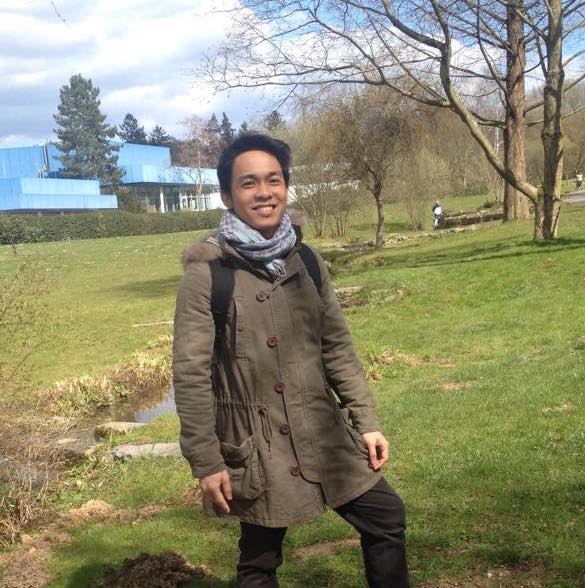
Nurse Spotlight: Insights into working at an elderly care home and at a hospital
Interview with a Philippine Nurse who first worked in a senior care facility for 3 years and then moved to a hospital:
When did you come to Germany and did you have to do an exam to be able to work here?
They fortunately fully recognized all my training, but I had also done some extra training in the Philippines before, so I did not have to do any exams. I arrived in Germany in 2015, the supervising nurse in the senior care facility where I was going to work picked me up and she took me to my new flat and gave me an introduction to the city, the team and such.
What was the most difficult thing to learn/to get used to?
Grundpflege! In a care facility it was exhausting at the beginning! I was not prepared for any of this. It is nothing like our hospital work. Later you begin to see it is very rewarding and it is actually time you get to spend with the patients and it helps them a lot on many layers. Not only on a medical basis, but a very personal one.
Were you unpleasantly surprised by something?
Apart from Grundpflege I had a hard time understanding the local dialect where I worked. It is not only the German language barrier, but also the dialect I found very hard to adapt to and I felt I was not much of use at the beginning.
How is the team work?
Very much fun, I am enjoying it at the hospital now. The care facility was also nice, but I was too busy with language and learning everything else to be able to concentrate on that.
Did you feel you were properly integrated into the team and the others tried to help you?
Yes, they did, but language was a major issue. But then it gets better once you have a routine.
How was it getting used to German culture?
Easy! I did a lot of reading online at home and did a few language courses where they also teach you a bit about German culture. The culture shock was not very big.
How did you feel in the first few months?
I was fine. Sure, working was hard, but having my own flat and learning new things was also interesting and kept me busy.
How do you feel now a few years later?
I am very satisfied but there is still a lot to do. I am very pleased with my job at the hospital now. I have nice colleagues and assistants who work with us. The team is big and so is the workload.
What advice would you give any nurse that comes to work here now?
Prepare mentally and emotionally. It is a big change. Keep an open mind. I felt Germans can be quite harsh sometimes, but they really don’t mean it in a bad way and you should not take it too hard. They are not being harsh, it is just a cultural thing of getting to the point at once and being very direct, but they are not being rude. That would have been good for me to know at the beginning.
Why did you switch from care facility to hospital after 3 years?
I wanted a bigger team and more specialized pathologies. And I felt I needed a change and more emphasis on medical jobs.
What do you miss most about home?
Food! You do get some ingredients in Asian supermarkets, but there is not much fresh seafood here.
What is something you really appreciate about Germany?
I really like the architecture. Also when I go on holidays, I try visiting places in Germany and was very pleasantly surprised by the beautiful landscapes and small pretty German towns. I will be flying home to the Philippines for a month in January next year to visit my family though.
What advice would you give someone to start their nursing career in Germany?
Start in a Pflegeheim (senior care facility), you do learn a lot there and it prepares you for quite a few things later on. Also for life outside hospital. It does make you stronger and you learn to speak up, which is something Germans don’t mind you doing. I learnt a lot about myself and I feel it was very good for me.
Where do you see yourself after this year?
I want to improve my German and learn more terminology and definitely will try and do further training. But I still need some time.
Virtual Learning Platforms
In the past decade, it has been possible to sign up to different learning platforms in order to update or enlarge your knowledge about a certain topic as well as to start learning a new skill.
According to Forbes “online learning has shown significant growth over the last decade, as the internet and education combine to provide people with the opportunity to gain new skills. Since the COVID-19 outbreak, online learning has become more centric in people’s lives.” The current pandemic pushed companies, schools, universities and individuals to opt for this method of learning and sharing. Nowadays platforms like Zoom, Google Meet, Microsoft Teams, just to name a few, are used by billions around the world, whether is for work, learning, keep in touch with family and friends or for a hobby.
The advantages of this type of learning can be summarized in these main points:
Variety: There are thousands of courses at a distance of a click
Time: people can set up their own schedule
Pace: there is the possibility of going faster or slowly
Location: learn from the comfort of your home from providers all around the world
Cost: on general the cost tends to be lower, especially if having in account that there are no costs for commuting or time spent to go to a certain place
There are different types of platforms, but they can be divided into two main groups:
Open source: an open source platform is a type of platform that can be used free of charge. Usually, it is mandatory to do a registration.
Premium: as the name says, this kind of platform is accessible through the payment of a fee. This fee can be a monthly or annual subscription, or an amount paid every time that the platform is accessed. Compared to the open source, in this case, the user has usually access to more features and services. (There are platforms that have both options, free and premium).
One of the areas where these platforms are being used with great results is to learn languages. There are a great number of different platforms, where millions of people have signed up to learn and improve their language skills.
These are great resources if you are thinking about coming to Germany to work. As you know, to be able to work in Germany as a registered nurse you have to complete and pass the exam for the B2 level. Because of that and also because we know that this way to learn is effective and valuable, Care With Care has established partnerships with some of the most renowned and trusted virtual language providers, in order to help you to achieve the desired German language level and come to Germany, at a discounted rate. If you want to fulfil your dream to come to Germany find out more about our program – Your Journey to Germany! There you can find all the information that you need, from the enrollment requirements, steps of the program, language information, timeline, etc. From there you can get in touch with an adviser in case you want to discuss your particular situation and needs and also enroll in our program by filling a short form that will kick start the change your life for the better. Germany is waiting for you!
GERMANY NEEDS YOU
Nurse job description and requirements to work as a Registered nurse in Germany
Like in other countries, Germany has a lack of nurses in hospitals, elderly care homes as well as in other healthcare units. According to the German Health Minister Jens Spahn, some 50,000 positions need to be filled (2020) and this number only tends to grow. This situation has several causes but in general, it is due to two main reasons:
Ageing of the population, that will need more medical care;
The decrease in the birth rate.
To overcome this situation, the German health institutions have started to recruit nurses from abroad. The nurses that come from the EU have their qualifications immediately recognised, but when is the case that the healthcare professionals are recruited from outside of the EU there is a demand, by the German authorities, to go through a process of qualification recognition. The other aspect to take in consideration is the fact that there is a minimum German language requirement to work as a nurse, that now stands for B2. The reason for this requirement is justified as nurses will have to communicate with patients in order to understand their questions and complaints as well as talk to them to keep them company, especially in the case of the elderly patients living in care homes.
In order to fill the vacancies, in most of the cases, the healthcare providers turn to the recruitment agencies to source their needs. The agencies provide to the prospective employers’ tailormade solutions, that fulfil their needs. At the same time, the candidates for these jobs feel more secure and confident to be supported and guided throughout the process by the agency.
There are thousands of job posts and, depending on the main duties, they can differ a bit from each other. In the case that the job required is for a more specialised unit or clinique, there may be a need to have experience in that area.
As for an illustrative example, here is a general job description for a nurse position:
About the job
Professional patient care
Careful and continuous patient observation
Improvement and maintenance of Good Medical Practices (GMPs)
Work in a friendly and multi-disciplinary team
Empathy and friendly communication with patients and their relatives as well as with colleagues and suppliers
About you
Have a Nurse degree
Passion and commitment for what you do
Have a can-do attitude
High competence, both professional and personal
Be a team player and at the same time be able to work independently
Flexibility and adaptability to new tasks, people and methods/procedures
Be positive
About the employer
A permanent employment contract
An attractive salary as well as the possibility of career progress and specialisation
Extensive on boarding for newcomers as well as continues training (internal and external)
Good work environment
Care With Care can help you to grab this opportunity to come to Germany to work. Our team works directly with some of the most renowned health care institutions all over Germany in order to supply them with enthusiastic, passioned and committed nurses from different countries around the world that want to come to work in Germany. Our services are free of charge for our candidates. We perform a very careful process of selection and matching that brings the best solution both for candidates and for their prospective employers.
If you are looking for a stable, rewarding and satisfying career and are eager to know more about this fantastic opportunity that can change your life for better, please check our program CWC – Your Journey to Germany. We welcome you!
CARE WITH CARE PROGRAM EXPLAINED IN 5 EASY STEPS
Pursuing your career dreams can sometimes seem a difficult task, especially if you would need to go through a process that you have never been before. This is where Care With Care – Your Journey to Germany can be helpful. This program is dedicated to Qualified Nurses from different parts of the world, who want to come to Germany to work, giving them the possibility of developing both their careers and personal lives. With Care With Care, you will be taken by the hand, from the moment that you decide to take part in the program until you arrive in Germany and beyond. You will be guided and supported by CWC during your German language training, employment contract signing, Qualification Recognition to work as a registered nurse, visa attribution, move and integration in Germany.
What is the main requirement?
CWC only asks you to be committed and show engagement to the program. The substantial costs of the program are supported by Care With Care.
Take a look below and you will be surprised how the program fits you and also how easily it can work for you!
NOT WITHOUT MY FAMILY: Guide to Family Reunion For Nurses In Germany
In Germany, the constitutional law (Grundgesetz) grants special protection of marriage and the family. For this reason, it is generally possible that family members of foreign workers who are living in Germany can immigrate to Germany to join their family member—of course, under certain conditions. We have summarized the most important facts about family reunion for you. Nevertheless, the Care With Care team absolutely recommends that everyone considering family reunion should obtain detailed and professional advice. The team will be happy to assist in finding respective counseling centers across Germany.
MAIN FACTS ON FAMILY REUNION
The term ‘family reunion’ refers to the immigration of family members of a person who is already living (and working) in the destination country. The purpose is to facilitate family reunification. Under certain conditions, foreign citizens may obtain a residence permit for Germany if close family members already hold a residence permit for Germany or even have German citizenship. Family reunion typically involves bringing the person’s spouse and/or minor children to join them in Germany. In very exceptional cases, approval is granted to bring other relatives, such as (grand)parents and grandchildren.
The legal framework for family reunion is built by the German Residence Act (Sections 27-36 AufenthG), the Asylum Act (Section 26 AsylG), and the Act on the General Freedom of Movement for EU citizens (Section 5 para. 2). Approval for immigration of family members is granted by the immigration authorities in liaison with the relevant German diplomatic mission abroad. However, the approval of family reunion is handled differently in the German Federal States, the legal conditions in the states also differ. For this reason, an individual consultation at your place of residence is imperative.
CONDITIONS FOR FAMILY REUNION
To be permitted to join a close family member who is already living in Germany, the following conditions must normally be fulfilled:
The identity of the immigrating person must be clear and verified.
The family member who is already resident in Germany must have a residence or settlement permit or must be a German citizen.
For subsequently immigrating partners: If the marriage did not already exist in the country of origin, the partner who is already resident in Germany must have had a residence permit for at least two years—only then can the other partner immigrate.
The family member who is resident in Germany must provide sufficient accommodation space for all immigrating persons.
The family member who is resident in Germany must have sufficient income to be able to provide for the immigrating person(s). The family must not be dependent on social welfare benefits.
There must be no serious public interest in expelling the person who is immigrating: The person who is immigrating must not have committed any offences and must not pose a risk to public safety in Germany.
To enter Germany, all immigrating family members require a Family Reunion Visa to Join a Relative or Partner in Germany. To remain in Germany in the longer term, they will then require a residence permit.
Family reunion is generally restricted to the spouse or registered partner and to minor children and, in the case of minor residents in Germany, family reunion is limited to their parents. Please note: Children over the age of 16 may only immigrate in exceptional cases.
The immigrating spouses or partners must prove that they have at least a basic knowledge of German—typically by the German language certificate A1 (European Language Certificate).
All documents need to be brought as originals, plus 2 copies of each document (except for application & explanation forms). All documents need to be submitted in either German or English or via a notarial certified translation.
At the moment, the issuance of a German family reunion visa in the Philippines costs € 75 for adults and € 30 for minors.
REQUIRED DOCUMENTS TO OBTAIN THE FAMILY REUNION VISA
For family reunion, the immigrating family member must apply for a visa for the purposes of family reunification to the German diplomatic mission in the country in which he or she is normally resident or in which he or she has been permitted to reside for at least six months. To receive the visa, the person needs to submit several documents to the embassy or consulate closest to his or her residence home.
Documents generally required for a German visa are:
2 application forms, duly completed with correct information & signed
Copies of the identification card or passport & certificate of registration of the person already residing in Germany
Copy of residence or settlement permit of the person already residing in Germany
Invitation letter by the family member residing in Germany, confirming he or she wants the relative to move to Germany for family reunion reasons
Additional documents specifically required for the German Family Reunion visa are:
Proof of accommodation to verify sufficient space for the applicant at the resident’s home
Proof of financial means of the person residing in Germany, proving he or she can financially support the immigrating family member(s)
Proof of German language skills of the applicant, if min. 18 years old (min. level A1 of European Language Certificate)
For spouses or registered partners: Registration or marriage certificate translated into German & certified by the Germany embassy
For children: Birth certificate & proof of kid’s nationality, plus proof of right of care and custody of the parent residing in Germany
For Filipino residents: PSA Index Certificate > CRS FORM No. 4 (CENOMAR) or PSA CRS Form No. 5 Advisory on Marriages
Proof of German health & travel insurance
IN 5 EASY STEPS TO YOUR FAMILY VISA FOR GERMANY
If you follow all the rules and collect all necessary documents, you will quickly receive your family reunion visa for Germany:
1. THOROUGHLY PREPARE YOUR VISA APPLICATION
Carefully collect, complete, print and sign all required documents before applying. Note that you will need two copies of each document and handwritten forms will not be accepted.
2. MAKE AN APPOINTMENT FOR SUBMITTING YOUR APPLICATION
It’s mandatory to book an appointment with the German embassy or consulate closest to you to submit all your visa application documents. So please reserve one in advance.
3. PERSONALLY SUBMIT YOUR VISA APPLICATION
Be on time for your visa application appointment! And remember that you need to go there in person to submit all your documents. If the application is complete your passport, application form and documents will be held temporarily by the embassy or consulate.
4. WAIT FOR APPLICATION & BIOMETRIC DATA COLLECTION
All your application form data will be entered into the online system of the German embassy or consulate. You will normally receive a printed copy of your application. Please check all the details on it and verify by signature that all the data is correct. After paying your visa, you will get a receipt to later collect your visa and passport—carefully keep it. Your biometrics will also be collected as well as a 10-digit fingerprint scan.
5. COLLECT YOUR VISA & PASSPORT
Congrats! You have completed the visa application process. Your application will be examined and approved by the German embassy or consulate and the German immigration authorities. Make sure you keep your payment receipt to collect your visa and passport after confirmation.
ADVICE CENTERS ACROSS GERMANY
In Germany, depending on the Federal State, there are different contact points where the person already resident in Germany can obtain advice on the topic of family reunion. These include cities and municipalities, welcome centers, refugee advice centers, charities and other organizations. The Care With Care team will be happy to help you find an advice center near where you live.
Finally, we like to recommend you a video of GerMangyan, which summarizes her experience with family reunion.
10 TIPS ON HOW TO CHOOSE A RECRUITMENT AGENCY FOR NURSES
You have a dream of going abroad to Europe and working there as a nurse? Good choice and great opportunities, especially in Germany! 45,000 nurses are needed there in order to fully cover the need across hospitals and elderly care facilities. To make the big step to Germany you usually need to rely on the help and support of a recruitment agency as the application process is rather difficult and tricky. But what does it take to find a trustful and reliable recruitment agency? What are the characteristics of a good agency? Are there any signs that you can trust one? How to avoid hidden costs or other unexpected outcomes? We’ve put together ten factors you should carefully check out before signing your agreement with a certain recruitment agency. Take your time to compare agencies and offers before you make your choice—it is often hard to switch agencies as you already have invested a lot of time and money into your journey to Germany. So, don’t rush and carefully check out all options!
1. NEVER PAY AN AGENCY FEE
Never ever pay a commission fee for being advised by an agency or referred to a German employer. Based on an agreement between the Philippines and Germany, this is forbidden. There still exist a couple of black sheep amongst recruiting agencies. So, hands off if an agency or future employer demands any commission from you!
Only agencies and employers accredited by the Philippine Overseas Employment Administration (POEA) can be taken as serious ones. It goes without saying, check each agency you consider applying with, whether it is POEA-accredited or not. To do so, just follow the official POEA link and verify, if the respective agency is listed. Or simply call the POEA hotline at 722-1144 or 722-1155 and receive approval this way. You will find Care With Care’s Manila based partner MAGSAYSAY GLOBAL SERVICES, INC. on the list that operates under the license number POEA-013-LB-032714-R.
3. SCAN THE AGENCY WEBSITE AND SOCIAL MEDIA
The first impression should always be an excellent one. And today’s business card of a recruitment agency should be its website. Go online and carefully check the website of the agency in question: Is it friendly and inviting? Does it contain enough useful information and offer details? Do you find testimonials there? Is there an imprint giving you the contact data? We at Care With Care have just updated our website to be fully transparent about our process. You also can check the agency’s Facebook or Instagram for further details: How often is the page updated? What are the reviews? How professional is the content?
4. TEST AVAILABILITY OF AGENTS
For sure you want to know who are the people behind the chosen recruitment agency. Are they competent, helpful and proactive? Because in the end you will rely on them as they will accompany you for at least a couple of months. Check if the website offers a hotline you can call to get a basic feeling about the people on the agency side or send a Facebook message to check how responsive the agency is.
5. CHECK ENTRY REQUIREMENTS
Before committing to an agency, you should carefully read the entry requirements. Some agencies demand work experience or very specific skills. Care With Care does not require any proof of practice. Even registered nurses on a beginners’ level are welcome to participate in the program.
6. FIGURE OUT NUMBER OF EMPLOYERS
If a recruitment agency has contracts with three to five German employers only, you might have a hard time getting a job offer from them as you will compete against better students in your German class. It might also be hard to rematch you with another facility in case something goes wrong or you simply don’t get along with your employer. Proactively ask each agency about the number of potential employers across the country. For example, Care With Care offers jobs with 25+ different employers in 100 locations all over Germany.
7. WATCH OUT FOR HIDDEN COSTS
Some agencies might cover the costs of the language training fully. But this might result in unexpected salary deductions later. Care With Care has no hidden fees or salary deductions and shares the point of view that both parties—the agency as well as the candidate—should make an investment. Of course, with a lower investment on the candidate’s side.
8. ASK FOR THE FINAL LANGUAGE LEVEL
Some agencies promise to bring you to Germany with the B1 language level already. But this means that you would need to work as a nursing assistant while still taking a B2 course in Germany and preparing for your B2 exam, which usually lasts around a year. This, in its turn, implies receiving a much lower salary and having the stress of studying after work. After all, there’s still a risk of failing the B2 exam and having to return back to the home country.
9. CHECK QUALITY OF LANGUAGE SCHOOLS
Also, don’t forget to check the quality of the language school(s) an agency works with: Ask about the specific partners and for how long they’ve been cooperating. Maybe there is even an internal language school and lab available. Always remember: You need the best language training! If you fail at the exam, you need to repeat it and pay the examination fee again.
10. HAVE A LOOK AT REVIEWS OR CONTACT OTHER NURSES
Whether it is Facebook or Google, also take the time to read some online reviews to get a better impression of each agency. What do nurses say about the different recruiters? Do they share positive feedback on your chosen one? Reviews can be helpful, especially when you are still indecisive. If you want to know more details, search online and try to find nurses who have already been deployed by an agency in question—usually, they will be more than happy to give you all the insider information to help you make the decision.
All in all, we recommend you to not rush it or to make sudden decisions about your recruitment agency for Germany. Take your time instead and check all available information about the potential recruiters. In the end trust your gut feeling and only commit to an agency offering help and positive vibes.
HOSPITAL OR ELDERLY CARE: What to Choose?
The decision to work abroad is already a difficult one for many people. And sooner or later in the application process another question will arise: Which kind of work would you prefer to do abroad—a job in a clinic or hospital, or one caring for elderly people? Already at the start of the application procedure, the Care With Care team will also ask about your preferences regarding your future workplace. We do so because we want to find an employer that is the best fit for you. We have compared the advantages of working as a nurse in a care home with those of working in a hospital. We hope this will help you to make your decision.
WORKING AS A NURSE IN AN ELDERLY CARE CENTER
Do you like taking care of elderly people? Do you enjoy spending time with them, helping out, and doing them favors? You don’t have reservations about helping seniors with their daily personal hygiene? Then you have what it takes to be a geriatric nurse!
A job in geriatric nursing typically is less stressful than working at a regular hospital since it is easier to plan your tasks and routines. In a hospital, in contrast, things can become hectic, the workflow is faster, tasks must be completed in less time, and complications and emergencies occur more frequently. Consider whether you are the type of person who thrives on adrenaline and can cope well in emergency situations. If this is not the case, then a nursing home is very likely the better option for you.
Working in the German health sector involves a lot of red tape—care record is very extensive and subject to many rules. However, in elderly care facilities, the documentation is usually better digitalized and more of it is automated. Due to the simpler structures, it is easier to avoid double documentation. For those people for whom the documentation of care processes is not their forte or their favorite activity, geriatric care would entail less bureaucracy.
When caring for the elderly ones, you spend most of your time with people who love to talk and chat. Why not take advantage of this opportunity to improve your German skills! In such an environment, you can easily practice your language skills right from the start and improve your German week by week. In elderly care, you also can be sure that you won’t be regularly involved in emergency cases where you need to communicate with people in stress situations in order to take the correct actions— which could be quite a challenge in a foreign language.
Finally, elderly care facilities tend to be smaller than hospitals. The atmosphere is homelier and the teams are tinier. Employers usually can devote more time to each employee—especially during the onboarding—and therefore take greater account of your specific requirements. You should take advantage of this opportunity to integrate quickly and seamlessly into your new team.
WORKING AS A NURSE AT A HOSPITAL OR A CLINIC
Do you prefer a more dynamic working atmosphere? Can you adapt well to changing scenarios or do you even thrive on emergency situations? Can you remain calm in emergencies and take considered actions? Then you might appreciate the daily challenges in German hospitals!
Working at a hospital or clinic generally offers greater diversity and variety. The tasks vary from day to day and you are constantly dealing with new patients. Depending on which hospital ward you are placed at, the daily routine will involve more or less stress. In addition to the daily basic care of the patients—which is also part of the routine in elderly care facilities—you can, however, learn an awful lot and your professional development can proceed at a faster pace.
Clinics and hospitals typically offer more and better career opportunities. There is certainly greater potential to progress your career than in elderly care. Employers in the clinical sector usually pay great attention to the training and further education of their employees. Large facilities even regularly arrange internal further training courses. Further education is vastly supported, and you are encouraged to specialize—for example, in wound management, surgical or intensive care.
Another important factor is that at the care-intensive wards of clinics and hospitals—such as intensive care, trauma surgery, heart surgery and neurology units—there are normally better staffing rates than in elderly care, which means that you can provide much more time and care to the individual patients you are responsible for. Nurses in clinics and hospitals are also slightly better paid on average than their colleagues in elderly care.
WHICH WORKPLACE SUITS ME BETTER: HOSPITAL OR ELDERLY CARE?
Sooner or later in the application process, you will have to decide if you prefer to work in elderly care or in the clinical sector. Our tip: Start thinking about this question as soon as you begin to apply for a nursing job abroad. Consider the following: What is important to you in your job? What are the deal-breaking factors? What kind of challenges do you like? And which workplace is likely to offer you these things? Create a pros and cons list for each type of workplace. The list with the most pros will help you to make the right decision. Here are the top 3 advantages of each workplace option at a glance
ELDERLY CARE
HOSPITAL
Lower stress level in daily routine
Greater variety in the job
Smaller and less formal teams
Better education opportunities
Less paperwork
Better patient/nurse ratio
More chances to improve your German
Slightly higher salary
Note: To attain professional recognition as a nurse in Germany, it is normally necessary to complete an adaptation measure. This can take the form of an adaptation course with a final examination (Kenntnisprüfung) or the nurse needs to accomplish an internship of at least six months at an approved hospital. The Care With Care team recommends its program participants to take the adaptation course and examination because of the shorter duration and earlier opportunity to work as a fully paid nurse. With the appropriate preparation, the examination is easily manageable—success rate is around 95 percent.
HAPPY IN HESSE: FILIPINO NURSES ARE WELL SETTLED IN GERMANY
More and more healthcare institutions and nursing facilities are now recruiting foreign healthcare professionals to counter the skills shortage in the sector. But not all the nurses and caregivers who come to Germany are happy and settled here. Whether these people stay long term in the country depends very much on how well they can integrate into society here. Care With Care goes to great lengths to familiarize the nurses with their new working and living environment and to encourage them to stay for a long time with their selected employer. The following interview with Wilvin S., a pioneer of the Care With Care program, tells us how he felt when he moved to Germany and how he settled in at his place of work and to life in the German state of Hesse. His experiences can also provide employers with useful tips for recruiting personnel from abroad.
WILVIN, WHAT MADE YOU DECIDE TO COME TO WORK IN GERMANY?
Originally, I was not focused on coming to Germany, I just wanted to work abroad. There are many countries in Europe with good job opportunities. But since I already had some family support here in Germany, it made sense for me to check out the job situation here. I was looking for a better future, better job opportunities, and other development opportunities regarding my career. And I’m in a good place here in Germany. There is a lot of support available for people to start a new life.
HOW DID YOU FIND THE CARE WITH CARE RECRUITMENT PROGRAM FOR NURSES?
I heard about it in 2014 during my training and I also heard that they were about to start a pilot project. That fit in well with my plans to go to Europe, so I applied to Care With Care looking for a healthcare position in Germany. The whole process with Care With Care was very professional from start to finish. We received a lot of help with the procurement of the necessary documents, for example.
DID YOU HAVE ANY FEARS OR ANXIETIES AT THE BEGINNING? WHAT WERE THE PRINCIPAL CHALLENGES YOU FACED?
The greatest challenge for me was to find the right job and dealing with all the red tape of course. The agreement between our two countries was still relatively new and many of the processes were untested. But with the help of the Care With Care staff, we could solve any problems and I quickly found a suitable job. And then there was the language barrier of course: At the beginning I was very anxious about learning German because it is a very difficult language for many foreigners. When I look back now, I never would have imagined that I would be able to speak the language so well in such a short time!
WHAT WAS IT LIKE WHEN YOU ARRIVED TO GERMANY?HOW WERE YOU RECEIVED?
I arrived in Germany in January. It was cold and there was snow on the ground. But I received a wonderful warm welcome from my new employer. I was personally introduced to all the employees in the facility. I was given a very good insight into the processes in place in the care facility and the initial training was excellent. In my opinion, your first impressions and the feeling of being welcome in a new workplace depend very much on the employer’s interest in you.
WHAT DO YOU LIKE MOST ABOUT YOUR JOB AS A NURSE IN GERMANY?
A lot of things here are very different to the Philippines. The working world is organized very differently in Germany. Each person has greater responsibility for his own work area and I perform a lot of tasks that were previously not part of my scope of services, for example, I carry out many of the tasks of a ward nurse such as wound treatment and the documentation of care. This shows that the managers here have confidence in the care personnel, which I very much appreciate. The work itself is very satisfying. The relationship between me and my employer is good, and I really enjoy all the tasks that I carry out. With the labor laws here, I am well protected. I earn more than I would in my home country and my salary is transferred to my account every month without fail.
Career opportunities too are much better here than in the Philippines.
AND WHAT IS YOUR IMPRESSION OF GERMANY AS A COUNTRY?
When I first arrived, it took quite a bit of getting used to. Everything is different here: the food, the weather, the culture. What amazes me about Germany is how well everything is organized here. There are rules and laws which people respect. This discipline enables Germans to have a highly efficient healthcare system and other resourceful services. I think that’s great. The people seem a little cool and reserved at the beginning but once you make friends, these relationships are solid, and you can rely on your friends.
HOW IS THE RELATIONSHIP WITH THE RESIDENTS OF THE CARE CENTER? DO YOU GET ALONG WITH THEM ALL?
The relationship with the residents of our facility is very good. We often get talking and they will ask if I’m from Thailand or Japan. Right from the start, they were surprised how good my German was. They can’t believe how well I speak it. I’m very proud of that and I’m very grateful to Care With Care for the great training before I came.
SO, CAN YOU SAY THE DECISION TO COME TO GERMANY WAS THE RIGHT ONE?
Definitely. It was 100 percent the right decision! I’m very satisfied with my job and overall, I’m very happy. I can provide financial support to my family and I still have more disposable income than before I came. I was able to take a trip to Rome, for example, which I really enjoyed. I have had a lot of new experiences, and I’ve developed a lot—both professionally and as a person. I have become more independent now and I can make more decisions for myself. The people where I work are also independent thinkers and are allowed to say what they think. I’ve learned to make my own suggestions, to discuss things, and to stand up for my own decisions. Overall, I’ve become a much more confident person.
WHAT ADVICE WOULD YOU GIVE TO OTHER NURSES WHO WANT TO COME TO GERMANY?
The first thing they should do is learn German properly. This is the key to coping with all eventualities and to settling in the country, especially in situations where you need help. If you can speak to people in German, they are glad to help you. It is also important to be aware of the legal differences and to know what the job entails before you decide which country to go to. In my case, for example, before coming to Germany I had worked in the emergency department of a hospital and sometimes had to carry out resuscitations. In this country I wouldn’t be permitted to do that. In Germany there are also great career opportunities. The employer challenges you to take on additional responsibilities. You are encouraged to continue your professional development and participate in training courses such as wound management or pain management. Applicants should definitely consider that as a major advantage.
WOULD YOU RECOMMEND CARE WITH CARE TO OTHER CANDIDATES?
Absolutely. My experience with Care With Care has been excellent and I received a lot of support. This began when I was in school in the Philippines: with the very effective language training and the inspiring teachers who encouraged me and piqued my curiosity in the world outside my own country. Even today, the employees of Care With Care are available to help with any questions or problems, I can turn to them at any time.
My Exciting Journey With Care With Care
23 questions to Marnie, our Care With Care nurse in Germany.
Marnie, originally from Zamboanga City in the Philippines, joined Care With Care in 2014. It was quite an exciting journey for her as she worked in various cities in Germany first, then met her future husband in Europe in 2018 and will now transition to the UK to work as nurse there. We asked her a couple of questions about her experience with Care With Care, her life in Germany, etc. Do look forward to discover some insights about the program and what will expect you as a nurse in Europe.
1. WHEN DID YOU JOIN THE CARE WITH CARE PROGRAM?
I joined the Care With Care program around 2014 when I was still learning the German language. I initially saw their poster at the Goethe-Institut and I was intrigued, so I did my own research about them and joined.
2. WHY DID YOU DECIDE TO JOIN CARE WITH CARE AND TO GO ABROAD TO WORK AS A NURSE IN EUROPE?
I joined Care With Care because I felt like I am part of a family. They prioritize my well-being, safety and satisfaction. It meant less stress for me since they took care of everything. Furthermore, working as a nurse in Europe was my dream. Since I was a little girl, Europe fascinated me. From the medieval castles to the wonderful Christmas markets, I’ve always loved Europe.
3. WHY DID YOU CHOOSE GERMANY AS A DESTINATION COUNTRY?
Coincidence. I saw late-night news about Germany needing nurses and I said to myself: ” Yes, I am going there”. Since then I’ve researched about Germany, its rich history, culture, food, people, and I was drawn to it. I liked the challenge! And knowing myself, I would face every hurdle to reach my goals and aspirations.
4. HOW LONG DID IT TAKE TO GET TO GERMANY AFTER YOU SIGNED UP WITH CARE WITH CARE?
A few months only.
5. WHAT WAS THE MOST INTENSE/EXHAUSTING PART OF THE PROGRAM? WHAT WAS THE BIGGEST HURDLE FOR YOU TO OVERCOME?
The most exhausting part for me were those trips to the POEA for some documentation. And the biggest hurdle for me was the waiting time for the approval of the documents. I am not really the patient type ????
6. HOW DID YOU MANAGE THAT HURDLE?
I spent time with my family, and ate those comfort foods that I know I will miss.
7. THINKING BACK TO YOUR ARRIVAL IN GERMANY, HOW CAN YOU DESCRIBE THE FIRST MONTHS?
Culture shock and lots of adjustment. Although I’ve read about Germany, it was still different than anticipated.
8. WHICH JOBS AND WHERE DID YOU TAKE IN GERMANY?
I first worked as a “Pflegefachkraft” at an elderly care home in Baden-Wuerttemberg. Later I moved to Munich to work there at a neurology department in a hospital.
9. WHAT IS NICE ABOUT YOUR JOB HERE?
I practiced my language skills with the elderly. It was fun and they appreciate the fact that I am speaking their language. Although they spoke in a colloquial “Schwäbisch” accent and not “Hochdeutsch”, I loved the challenge and it was fun. Also, my colleagues were really friendly and helpful, especially to a newbie.
10. WHAT IS VERY DIFFERENT COMPARED TO THE PHILIPPINES?
The “Grundpflege” or basic care of the elderly. I really struggled with that, but I’ve learned quickly. In the Philippines, the family is responsible for taking care of the patient’s basic needs like bathing, dressing up, oral feeding. Because of the tight family ties in the Philippines, elderly care homes are almost non-existent.
11. HOW IS THE WELCOMING CULTURE AT WORK HERE IN GERMANY?
Well, most Germans are direct and efficient at work so they almost expect the same. If you have questions, ask them directly. Don’t be shy or keep it to yourself. Better ask questions than make mistakes. They would appreciate that.
12. ARE YOU SATISFIED WITH YOUR EMPLOYER?
Yes, I am grateful for every opportunity that I’ve had. Right now I am working at a neurology department in a hospital, and my employer takes good care of the nurses. I am blessed.
13. HOW WOULD YOU RATE THE MONTHLY SALARY A NURSE GETS IN GERMANY?
It would depend on your years of experience and which part of the country you work. Gross income minus the tax, rent, insurance, etc. would probably leave you with 60% of the money.
14. IS IT EASY TO DEVELOP A CAREER AS A NURSE HERE IN GERMANY?
I think it depends on a person’s capabilities. One needs perseverance and determination to learn the language and work efficiently.
15. DO YOU LIKE GERMANY? WHAT IS GOOD ABOUT IT?
I LOVE Germany! I love the work life balance here. Also, Germans are generous with vacation, the healthcare system is amazing as well as the pension/retirement plan, unemployment benefits…
16. IS THERE SOMETHING STRANGE YOU OBSERVE HERE IN GERMANY?
Strange: blowing the nose in public (In Asia, that is totally rude.), straw in a hot coffee (Really?!), Germans hate aircon (even during melting summer weather), the “Freikörperkultur” — think it’s nobody’s business (I just can’t…), groceries and stores are open until 8 pm only and closed on Sundays (It’s like a war/end of the world situation inside grocery on Saturday eves).
17. WHAT ARE IN YOUR EYES THE ADVANTAGES OF LIVING IN THE HEART OF EUROPE? DID YOU E.G. TRAVEL A LOT? IF SO, WHERE HAVE YOU BEEN?
Traveling. Yes, I’ve been to a lot of European countries. Aside from Germany, I love the Czech Republic. It is enchanting!
18. DID YOU EVER REGRET GOING ABROAD FOR WORK AND LIVING?
No, I am a very independent person. No regrets!
19. WHAT ARE YOUR PLANS FOR THE FUTURE? WHAT DO YOU WANT TO ACHIEVE?
Founding my own family and finally being with my fiancé in the UK.
20. DID CARE WITH CARE HELP YOU WITH FOLLOWING THIS PATH?
Of course, they’ve always been supportive to me and my career advancements. Care With Care even sponsored my review and paid for my exams.
21. HOW DO YOU EVALUATE THE CARE WITH CARE PROGRAM? WHAT IS SPECIAL AND HELPFUL ABOUT IT?
Excellent! I knew my intuition was right from the start. Care With Care continues to support my goals. I can communicate with them any time and they always help me with my queries.
22. DO YOU THINK IT IS WORTH INVESTING A LOT OF TIME AND ALSO MONEY IN FINALLY BEING ABLE TO WORK AND LIVE ABROAD?
Yes, if that is what you really want. I invested in the language course and the return is ten-fold.
23. WHAT WOULD YOU RECOMMEND FRESH PROGRAM PARTICIPANTS WHEN THEY STRUGGLE WITH LANGUAGE STUDIES?
Fact: German language is difficult. It is what it is. Find ways to make the learning process FUN. My recommendations would be: Listen to German radio stations, watch movies and shows you like in German, read books. If you are a make-up enthusiast, watch German gurus on YouTube. If you like to cook/bake, read recipes in German. Practice, practice, practice. Don’t hesitate. Lose the perfection. As much as grammar is important, it makes sense to just speak confidently as long as your message is conveyed.
Thank you so much, Marnie, for all the insights you gave us here! We keep our fingers crossed that you quickly make it to the UK to be able to follow a career with another good employer.