


Working in Germany can be an exhilarating experience. It can certainly prove to be meaningful to each one in different ways. Despite the pandemic, there remains hope. Proof of that is that the Care With Care Team has continued its efforts to bring more nurses to Germany during the last months in order to strengthen and expand the healthcare system. As part of this process and due to the changing regulations that have to do with covid vaccination, it is important to keep our nurses up to date regarding the most recent requirements to enter Germany.
As of 15th March 2022, the new mandate regarding vaccination procedures in Germany requiring every individual employed in the healthcare sector to be vaccinated as per EU guidelines, comes into effect.
As a CWC candidate it is advisable for you to ensure that your vaccination dose/process is compatible with the EU norms, to successfully navigate through the contract and avoid confusion. Read more to know and note the exact details.
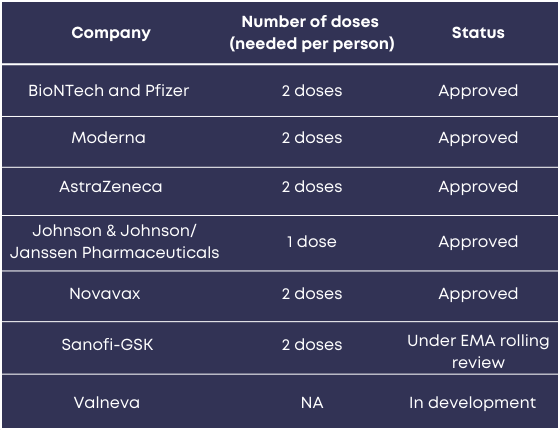
For personnel working at clinics, nursing homes, in medical and dental professions in Germany, proof/evidence of vaccination is compulsory from 15th March 2022. The doses received must be of a vaccine approved by the European Union which are listed below.
The individual must show documentation/evidence of having been completely vaccinated or having recovered, or a declaration stating that they are unable to get vaccinated/exempted from the vaccination process. If this does not occur, the company is responsible for notifying the German health department.
Not being fully vaccinated with a EU approved vaccine shall be considered a breach of standard contractual responsibilities meaning that if no evidence of vaccination is provided, the work arrangement shall be paused. In other words, this entails that you won’t be able to work in Germany as a nurse unless you are vaccinated with an EU approved vaccine.
Considering the European Medicines Agency’s (EMA) comprehensive evaluation, the Commission has granted 5 conditional commercial authorizations for vaccines produced by BioNTech and Pfizer, Moderna, AstraZeneca, Janssen Pharmaceutica NV, and Novavax, accordingly. Numerous additional vaccines are being evaluated by the EMA at various phases.
** Verified by official source
Proof of vaccination of any of the approved vaccines as per European Union guidelines will smoothen your process of working with German healthcare employers and eliminate any potential obstacles from your contract. This means that if you have received two doses of any of the five approved vaccines by the EU listed above, you will be allowed to work as a nurse upon your arrival in Germany with the employer that CWC has found for you.
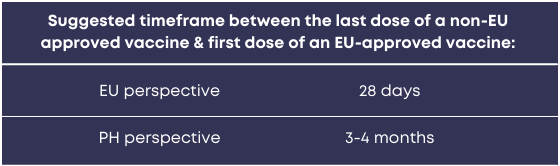
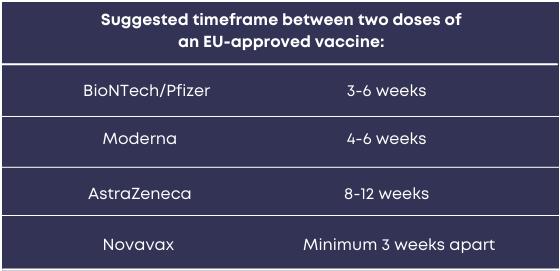
However, in case you are not vaccinated yet or the vaccine administered by your national health department/board is not approved by the European Union, you should begin a new vaccination series, taking into account the age-appropriate vaccination recommendations in order to obtain vaccinated status in the EU.
If you are beginning a new vaccination series, do not worry. Here is a list of guidelines for you!
Vulnerable individuals can be at serious risk to the vaccination process. If you have any underlying diseases or comorbidities, then kindly check with your doctor/physician before you sign up for the vaccination process. This can help you understand how your body might respond to the vaccine.
A vaccination process which is successfully completed according to EU guidelines will help you commence work in Germany without hassles, which remains our top most priority. We are always open to hearing from you. If you have any other queries or wish to contact us about a specific concern, please do email us at: candidates@carewithcare.com
Happy to hear from you!
Your CWC Team
In February 2022, the Gütegemeinschaft Anwerbung und Vermittlung von Pflegekräften aus dem Ausland e.V. (Quality Association for the Recruitment and Placement of Care Workers from Abroad) awarded the first RAL quality mark “Fair Recruitment Healthcare Germany”. CWC Recruitment is one of the first companies to be awarded and certified for its ethical, fair and transparent recruitment processes. (more…)
You have your job interview scheduled—congratulations! The best thing you can do to improve your chances of acing your interview is to prepare, and we‘ve got you covered! Below, see what employers are looking for and how to make a great first impression with our top interview tips.
Employers appreciate it when candidates take their time to do research on the health care facility and the role they are being interviewed for, as it illustrates genuine interest and commitment to the role and their particular institution, something our hospital employers love to see. The employer may also notice that you have taken time to prepare, which shows them how you will perform as an employee. The best resources for finding information about your potential employer are: the company’s website, social media communities and/or employees who are already working there.
Based on the information that you’ve read so far on the employer, there might be some open questions that you want to ask in the interview. Write them down and have them ready when the employer asks you about your open questions. They can be related to several topics such as: your tasks as a nurse or healthcare professional, the work environment, the working conditions or the location.
Just like you, Employers also prepare themselves for giving interviews. They will most likely have a list of questions that include your career ambitions and professional experience. Put yourself in the employer’s shoes and imagine what they may want to know about you. Then, write down possible questions and take the time to think about how you will answer them. This is a great exercise to get you thinking about your career goals and past experience, something we don’t often find the time to do!
Be aware: Employers know that you are still learning German, and they are prepared to ask you simple questions that match your language level, so don’t worry! It is a sign of commitment to try your best and speak in German, even if it isn’t perfect. We strongly recommend that you do not ask the employer to switch languages, as this is a sign that you may lack the resilience or commitment necessary to work in a foreign environment.
Dress professionally to make a good impression. Clean, ironed tops or scrubs and well kept hair will show the employer that you take the interview, and the potential role, seriously.If you are hesitating about what to wear, we advise you to ask your peers or college friends what they wore for their interviews.
At least one day before the interview, check and test the microphone and video settings of the device you will be using. Ask friends or family to help you by setting up a Skype or Zoom call with them to make sure you can be seen and heard clearly. When it is time to have the interview, make sure to do it in a private, quiet location with no background noise or activity. This will help you stay sharp and relaxed and allow the interviewer to focus on your great answers!
Once you receive the interview invite per e-mail, you’ll have information on which online platform will be used. Unless the employer suggests otherwise, you will generally be invited to the call through Google Meet, Zoom or Skype. If you are not familiar with the interview platform, make sure to have it downloaded and tested so you understand how it works come interview time. There is nothing more stressful than trying to sign into your interview platform only to realize that it is not downloaded on your device!
Punctuality is a sign of commitment and reliability. To show your motivation to work in Germany, it is crucial that you are ready when the employer arrives on the call. Have your device set up at least 20 minutes before the interview and be logged on to the call.
Don’t spend time on memorizing your CV, your answers should sound natural and authentic. Memorization can sound robotic and tense, so try to relax when speaking to the interviewer and remember that you are just having a normal conversation. Being friendly and sincere is also a great way to showcase your interpersonal skills, a key quality in a healthcare professional. In fact, when we asked our hospital partners about the top qualities they look for when hiring a new nurse or healthcare worker, 80% said interpersonal skills were very important when making their selection. So, just relax and be yourself – you have nothing to worry about!
We can’t always predict what will happen in the future and it is possible that the initial interview appointment you had doesn’t work anymore due to emergency situations, sickness, lack of internet or other reasons. If that’s the case, let CWC (candidates@cwc-recruitment.com) or its partner know asap so that we can reschedule the interview. This will prevent you from giving a bad impression to the employer.
Are you a Filipino nurse currently working in Germany? Living and working outside of the Philippines requires insurance that will allow you to exit your country of origin and protect you in the event of an emergency in the country of employment. But what happens when you are already abroad and it expires? Read on to learn more about your insurance renewal options!
Care With Care has a strong connection to the Philippines and relies heavily on its talented pool of nurses who are motivated to work in Germany. These nurses are part of a group known as Overseas Filipino Workers (OFWs), and must accomplish a series of bureaucratic steps as they prepare to deploy.
One of the main requirements for Filipino workers is to have a valid Overseas Employment Certificate (OEC) that allows them to exit the Philippines and work in Germany. In order to receive the OEC Certificate, the nurse must have an OFW Compulsory Insurance as mandated by the Philippine Dept of Labor and POEA together with proof of an OWWA Membership (Overseas Workers Welfare Administration). The OFW Compulsory Insurance provides coverage for life emergency related situations.
Luckily, Care With Care is here to ensure a successful journey from beginning to end. Our team is ready to help you obtain all necessary documents, including an OWWA membership and an OFW Compulsory Insurance, so all our nurses can exit the country and successfully land in Germany. All our Care With Care nurses coming from the Philippines arrive in Germany with a Compulsory Insurance issued through Magsaysay Global and provided by their insurance company partner Pioneer.
Both, the OWWA membership and the OFW Compulsory Insurance, are valid for the duration of the Employment Contract with a maximal threshold of 24 months. Care With Care nurses are generally offered a 2-year employment contract meaning that both, OWWA and OFW Insurance certificates, expire after this time frame.
However, what happens with these documents if (1) candidates change employers before their 2-year contract comes to an end or (2) if 2 years have already passed under the same initial contract? This means that nurses will not be entitled to the OFW Compulsory Insurance coverage and OWWA membership benefits for certain repatriation or life emergency situations.
IMPORTANT TIP: It is recommended to renew 2 months before expiry of OWWA Membership via online or at the POLO, whilst the OFW Compulsory Insurance is to be renewed through Magsaysay Global Services, Inc. CWC Manila Office.
Once actively studying and working in Germany, it is crucial that Filipino nurses keep track of the OWWA membership and OFW Compulsory Insurance expiration date and renew it in time. This ensures coverage in the event of medical-related or life emergency related situations. In a worst-case-scenario, if there is an emergency and the insurance has not been renewed, the person will not receive, and is not eligible to request, any coverage. In a nutshell: OFW Compulsory Insurance is required by the Philippine law under the DOLE and POEA rules to provide insurance protection. Our partner company in the Philippines, Magsaysay Global monitors and reports quarterly all deployed OFW nurses to POEA to provide information of their status/state/situation until the end duration of the contract. Should a nurse renew the initial employment contract, Magsaysay Global through CWC Manila office will assist you in the renewal of your OFW Compulsory Insurance, and OWWA Membership.
It’s understandable for this to feel overwhelming at first, but please know that Care With Care is here to help. If you are a nurse in Germany and need to renew your OWWA membership and/or your OFW Compulsory Insurance, check out the tips below to help you make an informed decision.
There are two scenarios where your OWWA Membership and OFW Compulsory Insurance will expire: (1) you’ve either reached the end of your initial 2-year contract or (2) within the first two years of your stay in Germany, you are changing employers. Whether it’s one or the other situation, these are the options you have to renew your documents:
OWWA Membership:
OFW Compulsory Insurance:
Please note that the coverage under OWWA Membership and OFW Compulsory Insurance differ in terms of benefits and financial amount provided. Further details are provided below.
OWWA was originally created to protect the welfare and well-being of Overseas Filipino Workers (OFWs) and their dependents. It stands for Overseas Workers Welfare Administration and it’s an administration branch that belongs to the Department of Labor and Employment (DOLE).
The main purpose of OWWA is to provide coverage within several fields
Pioneer is our partner insurance company located in the Philippines and an accredited insurer of the POEA. One of its services is to offer the so-called OFW Compulsory Insurance to all Filipinos working abroad which provides assistance in life emergency situations such as repatriation. This insurance is not equivalent to the health insurance that covers regular check ups among others. In other words, the OFW Compulsory Insurance is a separate one from the German Health Insurance you will have to request when in Germany.
The list of benefits listed under the OFW Compulsory Insurance provided by Pioneer for Overseas Filipino Workers are
**All these coverage are subject to proof of supporting documents and approval from Pioneer Insurance.
Check out the following table that gives specific details about the coverage of OWWA Membership and OFW Compulsory Insurance in different scenarios.
A two year OWWA Membership costs 21 EUR (25 USD).
A one year OFW Compulsory Insurance costs 28.50 EUR (32 USD).
These costs are applicable regardless of contract duration, change of employer, jobsite or recruitment agency.
OWWA Membership:
OFW Compulsory Insurance:
OWWA Membership:
OFW Compulsory Insurance:
OWWA:
OFW Compulsory Insurance through Pioneer:
You have a nursing degree and are thinking about going to Germany to work as a nurse? Do you want to understand whether you would like to work for an employer in Germany? This may be a good idea, especially because there is an increasing demand for nursing professions in Germany.
However, international labour migration is a big challenge and so it is advisable to find out about specific circumstances and opportunities in advance. Comprehensive information for international care workers is the basis for a confident decision to migrate to Germany to work in the care sector and to live in Germany.
Here you will find some tips on topics that may be relevant for internationally employed nursing professionals. Feel encouraged to inform yourself independently and to assess and evaluate the situation for yourself. This will protect you from unpleasant surprises and you can choose the path that suits you best.
Nursing is the most trusted and ethical profession there is. That’s what The Gallup Poll claims, and it has been true for 19 consecutive years. And yet, the world faces a growing shortage of nurse talent, with a 300,000 expected shortage by 2030, leading to dire consequences for healthcare systems and especially for patients.
But there is at least one silver lining: more than ever before, nurses face choices and opportunities. Countries around the world – Canada, UK, Japan, Germany… – are opening up their borders to this cherished profession.
As a nurse, if you wish to work abroad, it is important to decide what the optimal geography will be for you. When making this important decision, we suggest that you look at the holistic picture: it is not just about the salary that you will make. It is about the overall work conditions, the quality of life that you will enjoy, the long-term career opportunities and the assistance you will receive to properly integrate and lead a fulfilling life.
Today, we offer you 5 reasons why Germany might be your next career move as a nurse.

With a current shortage of 40.000 vacancies Germany has opened their borders and embraced foreign nurses to strengthen their healthcare system. The German government has identified the importance of international recruitment and has set a budget to hire and integrate foreign nurse talent. With the help and support of recruitment agencies, thousands of nurses have arrived in the country, creating a diverse multicultural nursing community. In 2019 alone, 15,500 foreign nurses received their German qualification recognition, a number that increased by 49% in comparison to 2018.
This is good news for nurses wishing to pursue career opportunities in Germany . As one one of the strongest economies in the world, Germany offers a long list of social security benefits, which we will detail below. It is also important to note that foreign nurses receive at least the same conditions as local nurses and will be protected by German labor law from the day of arrival.
Germany is not only looking for new nurses from abroad; it is also actively supporting nurses once they arrive in the country. For example, Care With Care offers programs through its training partner – Care Forward – who assists nurses in adjusting to their new life in Germany, with projects covering aspects such as:
 Cultural integration
Another advantage that nurses in Germany enjoy is the certainty of being able to find employment. As a country known to have a strong economy and one of the highest employment rates registered in 2021, it still lacks nursing services in hospitals, elderly care centers, outpatient social services, and rehab clinics.
As a country that offers numerous job opportunities, nurses are assured professional development and growth. Upon arrival, you will start working as an Assistant Nurse while you undergo a 3 to 9 month training to become a Registered Nurse. Once you have achieved these milestones, you will still have the possibility to specialize in several fields according to your interests.
What is ideal about the German continuing education program is that – as a nurse – you can a) combine studying with your work, b) receive the support of your employer and c) not have to cover most education costs. These opportunities will allow you to grow professionally and access excellent job opportunities.
Here are some examples of career developments in nursing that you can achieve through additional nurse training courses:

In addition to gaining experience abroad and having the possibility to train in areas of your choice, you will also learn German. Speaking this language will be an essential aspect of your career growth and will define your professional development in your future workplace. The better your level of German is, the more job opportunities you will have and the more variety will be available when it comes to choosing your employer.
Following specific programs, such as Care With Care, you will arrive in Germany with a German level of B1/B2. Your language skills will improve thanks to the work and social environment, where you can become proficient in a language that is not easy to learn.
During this process, the Care Forward program will foster language learning. Through modules that focus on teaching German language skills necessary for work in nursing, care and housekeeping. All with the purpose of helping you to move up in your career, to get a better salary and to have more opportunities.
As a matter of fact, living in Germany has the great advantage that education and the desire to improve oneself is valued and supported by: the government, recruitment agencies, and the employer. You can undertake training in the areas you are most passionate about and pursue academic studies. Whatever the case, your skills and knowledge in any area are in demand throughout the country. At the same time, you will gain additional linguistic skills that will expand your access to better job conditions.
Nurses coming to Germany will find variety in terms of the potential location as well as the employer-type.
In terms of location, the nursing shortage is palpable everywhere. Location-wise, we encourage you to think about whether you would benefit from a larger metropolitan city like Berlin or Munich, a smaller city like Friedrichshafen, Bielefeld, Nuremberg, Nagold or Elmshorn, or rather rural experience like Flechtingen or Bad Sülze.
Most foreign nurses work at one of the following three types of healthcare institutions:
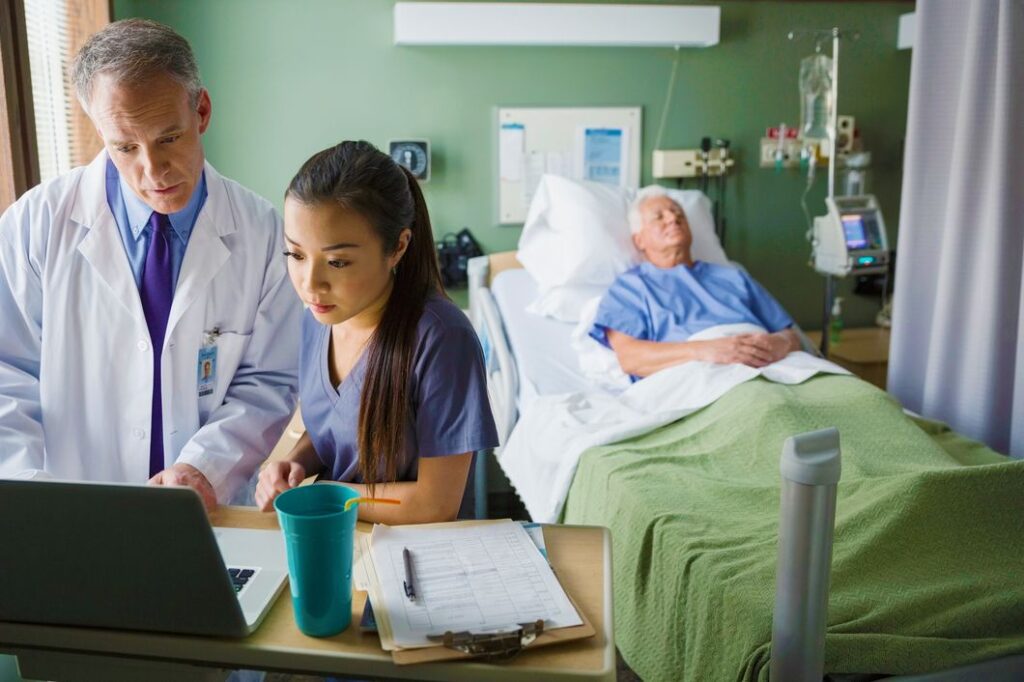 There are certain differences as well as similarities between these three workplaces. However, even within an employer type, the nursing roles may vary. In order to identify which one might align best with your goals and personality, we recommend that you do your research before interviewing with an employer and particularly before you accept a job offer. At Care With Care, we share with you employer profiles that explain the job offer, the location and lifestyle in detail and that map out the employer-specific integration plan upon arrival.
Here is a high level overview of the types of employers:
Germany’s hospital network is very wide, registering around 1,914 hospitals in 2019. Among their duties in a hospital, nurses care for patients 24 hours a day and closely monitor their physical and mental condition. They also carry out basic care and treatment measures, such as bathing and putting patients to bed, changing dressings and administering medication according to doctor’s orders. In addition, they assist in medical examinations and surgical interventions; they manage and control medical equipment and accompany doctors on their rounds. Nurses are also involved in planning nursing measures, nursing documentation and performing organizational and administrative tasks on the ward.
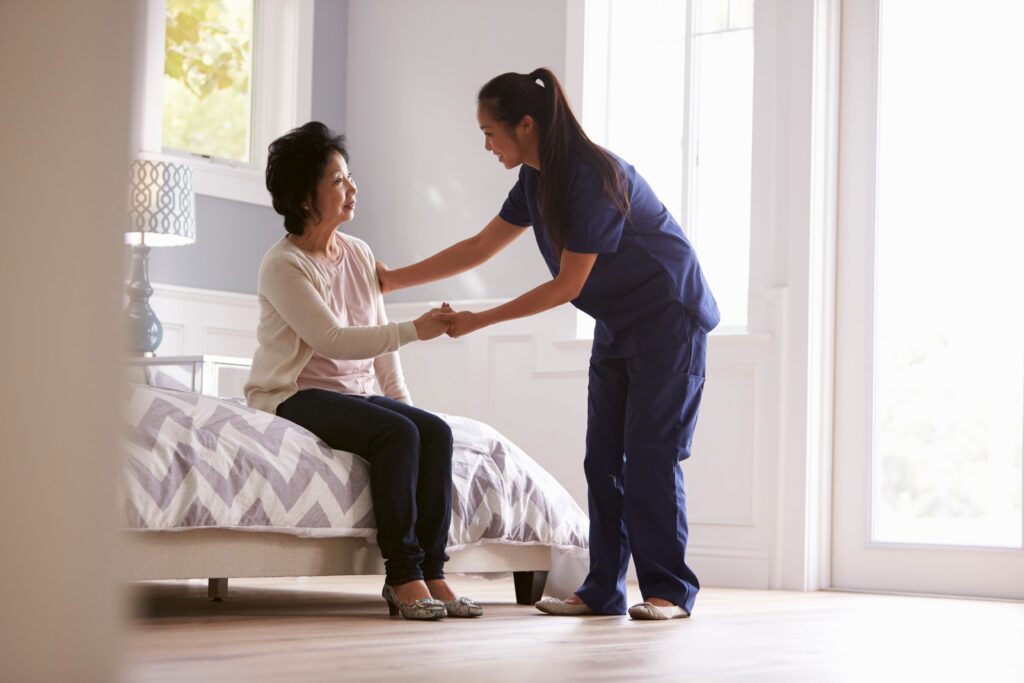 Geriatric care is currently the fastest growing sector in the German healthcare system. This is due to the mass retirement of the “Baby Boomer” generation, which will only increase in the coming years. At the moment there are around 2.6 million elderly people in Germany who require geriatric care. One of the benefits of working in nursing homes is that you have similar routines every day. And since the patients are often the same, nurses get to practice their German with the same people. It is also easier to create long-term emotional bonds with patients and feel part of a community. Some nurses may find it more comforting in the early years to work in elderly care for these reasons.
To get more insights, read: Hospital or Elderly Care: What to Choose?
About two million patients are treated in a rehabilitation clinic every year in Germany. There are different types of rehabilitation clinics depending on the field of specialization. The most common areas are orthopedics, addiction diseases, and psychosomatic medicine. In addition, there are clinics with specialized departments in oncology, neurology, and cardiology.
As a rehabilitation nurse, part of the main job will be to help patients recover from chronic illnesses or injuries and enable them to acquire again the main functions of their body and mind. The main goal is to provide enough tools to patients so that they can be independent enough when it comes to their chronic injury or disability. Other routine tasks include recording patients’ medical information and vital signs, changing wound and surgical dressings, administering medications as ordered. Not only do rehabilitation nurses accompany patients but also provide counseling and accompany patients and families during the recovery period.
While rehabilitation clinics can be found Germany-wide, traditionally, they are located in rural rather than metropolitan areas. In addition to their therapies, being close to nature is intended to allow rehabilitees to recover more swiftly.
To know more about how it is to live and work in different cities of Germany, check out this interview with a Care With Care nurse about her experience working in a Hospital and in an Elderly Care Center.
Thanks to its strong economy and generous social security system, Germany offers highly rewarding social benefits and job conditions, including:
Germany has an excellent public health care system. Every citizen must have health insurance by law, which is paid in combination by the employee, the employer, and the government. Public healthcare in Germany covers general practitioner appointments, in-hospital treatment, out-patient treatments, surgery, maternity services, and basic dental care. Even in the case of unemployment, every citizen maintains this health care coverage.
The average employee in Germany had an average of 28 vacation days in 2020. Additionally, there are an additional 9 public holidays, which may slightly vary depending on the region. Bavaria, for example, has 13 public holidays per year.
When working overtime or over the weekend, you will be compensated appropriately for it, either with additional salary or days off.
Salaries vary depending on your experience and seniority as a nurse in Germany.

You will start your career in Germany as a Nurse Assistant and become a Registered Nurse once you have passed the corresponding proficiency exams.
Getting sick is not reprimanded in Germany. Instead, in case of sickness, you are entitled to your normal salary if you follow the correct procedure. The German system is so considerate that – if you become ill during your vacation – you can convert your vacation time into sick leave and thus not lose those valuable vacation days.
You will have unemployment insurance in case you lose your job. Foreign nurses must work for at least two years to qualify for this benefit. In the unfortunate event that you lose your job, you will not only receive monetary benefits (up to 60% of your monthly average salary during your last 12 months) but also assistance in finding a new job.
A significant advantage of working in Germany is that if you plan to leave the country, perhaps to return to your homeland, you may not lose the pension contributions you have made. Thanks to an agreement with most countries, Germany also pays regular pension benefits to expatriates who have returned to their home country. In order to be eligible for the German pension, you must work in Germany for at least five years.
Considering that the cost of living is much lower in other countries, some people may decide to retire outside of Germany, even Germans themselves!
The 2020 study by Asher & Lyric ranked Germany as the seventh best country in the world to start a family. Parents receive generous financial support from the state, they are offered generous parental leave and their jobs are protected by law during this time.
There are several advantages if you are a parent working in Germany.  In fact, if you are a mother, you will be granted mandatory parental leave, before and after childbirth. In addition, mothers are entitled to full pay for the six weeks before and eight weeks after the birth, known as “mother’s protection time”.
Each parent may take up to three years of parental leave per child. In the case of the mother this three-year parental leave includes the six-week maternity leave, prescribed by law, during which the mother must stay at home. The German system is gender-equitable, as mothers and fathers have equal parental leave entitlements, and the rules allow both parents to devote large periods to family and career in shifts.
Laws such as the Maternity Protection Act (Mutterschutzgesetz) ensure that pregnant women are not discriminated against when applying for a job and to provide them with additional protection against dismissal because of their pregnancy or the arrival of their newborn child. Furthermore, the Employment ban (Beschäftigungsverbot) protects pregnant or breastfeeding women by discontinuing work if certain job activities pose a physical or mental health risk to the mother or child. Nursing work is one of these high-risk occupations where the employment ban applies.
Germany is considered quite generous when it comes to supporting parents in raising their children. The government spends around €223 billion each year on 156 different family benefits, including healthcare, generous parental leave, subsidized childcare and tax breaks.
 A child benefit ranging from €204-€235 per child is paid monthly to every household and the same amount is paid to all, regardless of the parents’ income. A tax-free child allowance can also be granted to parents under certain conditions. In addition, parents can save more taxes by deducting their childcare and school fees; up to €4,000 and €5,000 per year, respectively.
Strong and predominantly free education system
Germany has a world-class education system and support to raise children.
In cities such as Berlin and Hamburg, “Kindergartens” (child care centers) are free of charge as they are fully funded by the government. Likewise, public schools offering primary and secondary education are free, and of excellent quality. In regions where the education system is not fully free, it is still heavily subsidized by the government and all children are granted access to good education opportunities.
Regarding the public higher education institutions, most are free of charge, even the country’s top universities. Unlike other countries that charge sky-high tuition fees due to the high demand of students who wish to attend them, Germany’s top-ranked universities charge the same tuition fees as the rest: nothing.
In short, Germany is an excellent alternative for nurses who want to expand their horizons, improve their career and bet on a long-term quality of life. Agencies such as Care With Care support candidates like you in every step of the way and support you long-term after your arrival.
It is a great time to be a nurse. Find out more about your opportunities. Sign up today and get in touch with CWC!
Learn about the Care With Care Journey and check out the stories of our nurses that have already moved to Germany.
The lack of skilled workers has been affecting the economic growth of several countries and this situation tends to worsen. The OECD (www.oecd.org) reported that there is a lack of 1.2 million skilled workers in Germany and predicts an extension of that shortage of up to 3 million by 2030. Engineering, healthcare and IT are the top 3 most affected sectors.
The main reasons for this situation are the life expectancy increase and birth rate decrease. As this problem affects most of the other EU countries, it is necessary for these markets to expand their scope of recruitment out of the EU region. In order to facilitate recruitment from non-EU countries, the regulations have recently changed.
In the past, people from non-EU countries would be only allowed to come and work in Germany by fulfilling specific conditions such as:
To try to overcome partially this problem, in March 2020 a new Immigration Act for Skilled Workers came into force, relaxing some of the rules that existed before, in order to facilitate to the skilled workers from non-EU countries to come to Germany and find a job. This Act, therefore, has the goal of regulating the entrance of workers into the German labour market and at the same time to protect them from being exploited and work in illegal conditions.
To be considered a skilled worker you must have one of these qualifications:
What are the changes introduced by this new regulation?
What are the requirements to come to Germany under the Skilled Workers Immigration Act?
The changes in the Skilled Workers Immigration Act has broadened the scope of non-EU workers that can come to Germany, making also possible that both the qualification recognition and the visa permit to be obtained in a shorter amount of time.
If you are a qualified nurse and would like to know more about the process of coming to Germany to work in your field of specialisation, Care With Care (CWC) program – Your Journey to Germany is here to help you get your dream job. Our full program will take care of your qualification recognition and visa permit as well as will grant you an employment contract. It also includes a fully German training component, in case you do not have the required language knowledge (that must be at least B1 level*).
Restrictions of foreign nurse recruitment: who can work as a nurse in Germany?
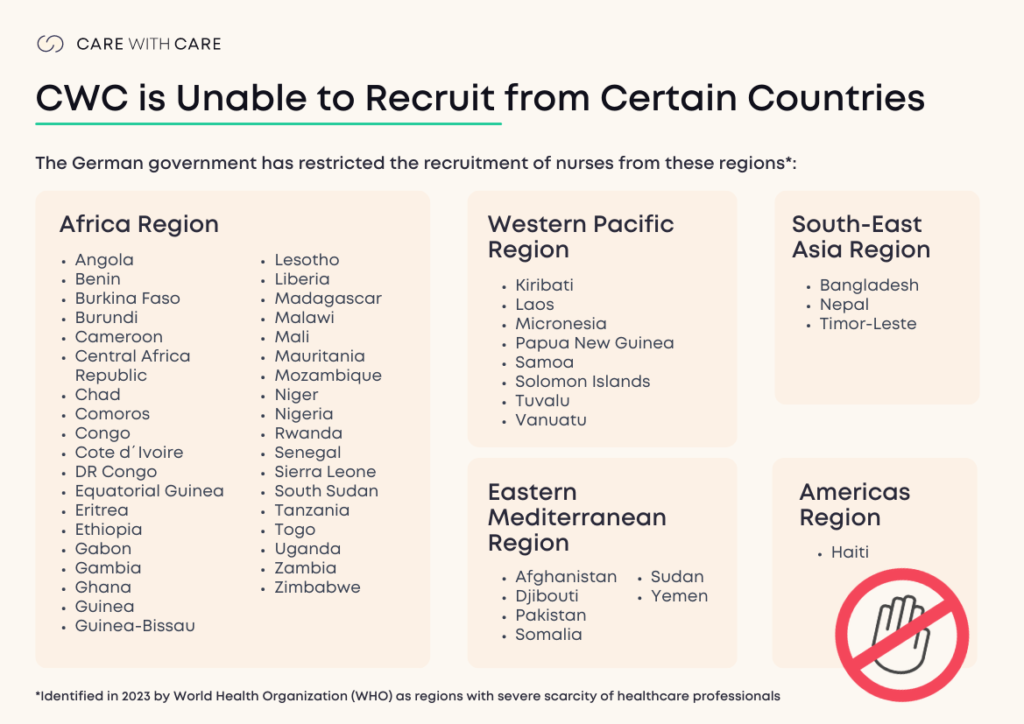
From a candidate perspective, making the bold decision to find work in another country is never easy and you should be as well informed as possible. From an employer perspective, it is crucial to understand which regions you may legally recruit from. So the first question to ask is: who can apply to work as a nurse in Germany? The answer to this question is closely tied to the World Health Organization (WHO) best-practices for the global recruitment of healthcare staff.
Coming to Germany to work is the ultimate dream for many professionals around the world, including nurses, which are in high demand with over 50.000 open job vacancies. Any German healthcare institutions – hospitals, elderly care homes and other medical facilities – are eager to recruit foreign nurses.
Who can apply for a nursing job in Germany?
It depends on where candidates live, not so much where they come from. We have broken down the answer into two geographic categories:
The progression and re-evaluation of the WHO shortlist:
The WHO-shortage list is determined by two main factors:
This list was only recently updated: while the current list from 2023 reports 55 regions with healthcare staffing shortage, the previous lists from 2020 and 2006 included 47 and 57 countries respectively. We want to congratulate Cambodia, Bhutan, India, Indonesia, Myanmar, Morocco, Iraq, El Salvador, Honduras, Nicaragua, Peru and Kenya for having addressed and strengthened their local healthcare staffing ecosystem over the past 14 years.
Care With Care´s philosophy of recruitment
Care With Care appreciates the notion of protecting countries in need of their own healthcare professionals and is therefore committed to only recruit from regions outside of the WHO shortlist of countries. We also believe in forming partnerships with nursing schools and universities around the world in order to attract more talent into the healthcare professions.
Care With Care´s mission is to provide under- and unemployed nurses the opportunity to come to Germany and work as a registered nurse. If you currently live in a region outside of the WHO shortlist and are interested in working in Germany as a nurse, or you are an employer interested in recruiting foreign staff, we invite you to visit our page and contact us.
Care With Care was launched in 2012 by Laura Esnaola and Dr. Steffen Zoller to offer a transparent and honest recruitment service for German healthcare institutions and nurse professionals around the world. Read more about our values and how we got started in our Harvard Business Manager article.
Article last updated: 31st March 2023
From a nurse perspective, becoming a registered nurse in Germany can be confusing. From an employer perspective, the amount of work to process the qualification recognition paperwork and the effort to organize training for a candidate to go from a Nurse Assistant to a Registered Nurse can be daunting.
Foreign nurses and German employers are often left wondering what the best path to becoming a registered nurse is.
Some of the questions we hear from foreign nurses every day include:
1) Do I need to recognize my nurse qualifications in order to work as a nurse in Germany?
2) Will I be required to do a qualification recognition measure (“Anpassungsmaßnahme”) in Germany to become a registered nurse?
Some of the questions we hear from German employers are:
3) How lengthy is the qualification recognition paperwork process and how can we avoid deployment delays due to bureaucracy?
4) What is the best training for nurses so that they are ready to pass their Registered Nurse examination?
One question that we hear overall is:
5) What qualification recognition measure options are there?
Don´t worry, we are here to help and will break these topics down for you.
Let´s start with the basics…
1) Who needs to recognize their nurse qualifications in order to work as a nurse in Germany?
The first answer is very simple: if you have a degree in nursing or a nursing license from a EU country, you do not have to undergo the Qualification Recognition (QR) process.
However, what happens if you are a foreign nurse that is already in Europe and wants to become a nurse in Germany? Regardless of what visa status you currently have and whether you have already obtained a Qualification Recognition (QR) in your current country, you will have to undergo the German QR process and file your paperwork in order to become a nurse in Germany.
2) Will I be required to do a Qualification Recognition (QR) Measure to become a Registered Nurse?
The short answer is: if your degree is from outside Europe, most likely yes.
While you might have obtained a university nursing degree in your home country, which might be considered superior to the 3 year technical German nursing degree, the German authorities want to ensure that you are properly trained to succeed at your new job in Germany. From CWC´s experience of bringing hundreds of foreign nurses to Germany over the past 9 years, 99% of foreign nurses recruited from outside Europe are currently required to undergo a Qualification Recognition Measure (Anpassungsmaßnahme) upon arrival in Germany to become a registered nurse in Germany. One important point to note is that QR decisions might vary across local authorities. Given the German political system, each of the 16 states “Bundesländer” may choose their own processes and decision-making. However, while a few Bundesländer were in the past giving foreign nurses the full recognition, this trend has now subsided and all states have converged towards requiring the QR measure from all nurses with nursing degrees outside of Europe.
3) How lengthy is the QR process and can it negatively affect deployment timelines?
Every Bundesland in Germany has their own slightly different version of the QR document process and timelines. Our experience since 2012 has shown that processing timelines range anywhere between 6 weeks and 10 months! Therefore, it is important to understand the process of the particular authority that will review each candidate’s documentation in order to avoid unnecessary delays. In March 2020, the “beschleunigtes Fachkräfteverfahren” was implemented in Germany to expedite the QR decision-making process, which works well across certain Bundesländer.
To expedite the process, Care With Care works closely with both the candidates and the German employers to have all the required paperwork ready, notarized and translated by the time the candidate receives a job offer. At that point, Care With Care submits the paperwork to the responsible authority: our goal is to receive the QR results by the time the candidate has passed his / her language examination.
Care With Care believes in keeping all stakeholders informed regarding timelines, next steps and expectations, in order to create maximum transparency and allow both candidates and employers to properly prepare for the deployment to Germany.
4) How can employers ensure the best training to ensure candidates succeed in becoming a Registered Nurse?
Every employer is set up differently and it is crucial to identify which QR measure will work best at their institution. As you will see below, the options range from offering a “Lehrgang” training at your institution to outsourcing the training to partner nursing schools. At Care With Care, we work closely with employers to identify the resources that they can invest into the QR training and the timelines expectations for the nurses to become fully registered. We can offer different options and always have an open mind to testing alternative models, as long as we do not compromise the quality of the training. If you are interested in exploring QR opportunities, feel free to contact us.
5) What Qualification Recognition (QR) Measures exist and how is this path decided?
There are two main QR Measure options: a) the “Lehrgang” and b) the “Kenntnisprüfung”.
Now that you are familiarized with the two QR Measure models, let us share a few “must knows”:
CWC has had almost 10 years of experience developing QR Measures that set foreign nurses up for success upon arriving in Germany. 93% of our nurses have passed the QR Measure on the first try and 99.8% have received their German nurse license (“Urkunde”) upon arriving in Germany.
Our advice to all foreign nurses is: no matter which agency or employer you decide to work with, make sure that they have experience helping you become a registered nurse once you are in Germany. This might be the most crucial step for your long-term success in your new job.
Our advice for all employers is: we recommend having a solid QR plan for your candidates upon arriving in Germany as it is crucial to ensure their long-term success in your institution and in this new country. Care With Care can gladly help you design a QR plan that works for you and your candidates.
This article will showcase the particular language path to becoming a registered nurse in Germany and pursuing a long-term healthcare career in Germany. We will also discuss what German language exams are recognized by the German authorities. Lastly, we will offer some tips to learning the German language successfully.
Candidates may work as a Nurse Assistant in Germany as long as they have passed the B1 exam, and of course have processed the Qualification Recognition in the local authority where they will work. To work as a Registered Nurse, candidates must pass their B2 exam as well as your Qualification Recognition Measure (“Anpassugnsmassnahme”).
There is currently one state (Bundesland) that offers an exception: Hessen, which accepts B1 telc Pflege examination instead of the usual B2 exam required by all other states.
This answer is straightforward and simple! German authorities only accept language exams from three different language schools: Goethe, Telc and ÖSD.
All three exam methodologies abide by the Common European Framework of Reference for Languages (CEF or CEFR) and will test candidates on 4 sections: Reading, Writing, Listening and Speaking. The good news is that – if candidates do not pass all these sections at once – they can schedule a follow-up exam for the specific sections that they still need to pass. When deciding which exam to prepare for, candidates should check exam dates, locations and costs. Candidates are required to pass the complete level B2 exam at one of the 3 institutions above.
Candidates can travel to Germany with the B1 language certificate. Once in Germany, the timeline for passing the B2 exam depends on the visa. If candidates travel to Germany on a work visa, either §16d or §16f, – which are the ones that Care With Care recommends – candidates have 18 months upon arrival to pass the required B2 language exam as well as the Qualification Recognition Measure. The Care With Care Model is set up in such a way that candidates should be ready to take the B2 exam within 2-3 months of upon arriving in Germany.
At Care With Care, we guide candidates in their home countries to enroll in the most appropriate language course for them. We also offer ongoing language progress as well as mock exam tests in order to help them gage how effective their studies are and to get ready for their exams. It is also crucial that candidates travel to Germany either with a B2 certificate or a concrete plan to study and pass the B2 exam upon arriving in their new country. Falling to do so puts the candidate at risk. Therefore, we recommend that – whatever employer or agency candidates work with – make sure that there is a clear and high quality language plan ready in Germany. This will be crucial to set candidates up for success!
